


This is one of the most interesting questions in African history.
Zambia is surrounded by countries that have experienced major wars, yet since independence on 24 October 1964, it has avoided a full-scale civil war or a sustained war fought across its own territory.
Think about its neighbours:
* Angola experienced a civil war lasting from 1975 to 2002.
* Mozambique experienced a civil war from 1977 to 1992.
* Zimbabwe experienced a liberation war before independence.
* Democratic Republic of Congo has experienced repeated conflicts.
* Namibia experienced a prolonged liberation struggle.
* Tanzania fought a war against Uganda in 1978–79.
Yet Zambia maintained its national political independence and territorial integrity without descending into a comparable nationwide war.
But there is an important distinction: Zambia has not been completely untouched by armed conflict. It experienced cross-border attacks, military incidents, political violence and the consequences of wars in neighbouring countries.
Why did Zambia avoid the fate of many of its neighbours?
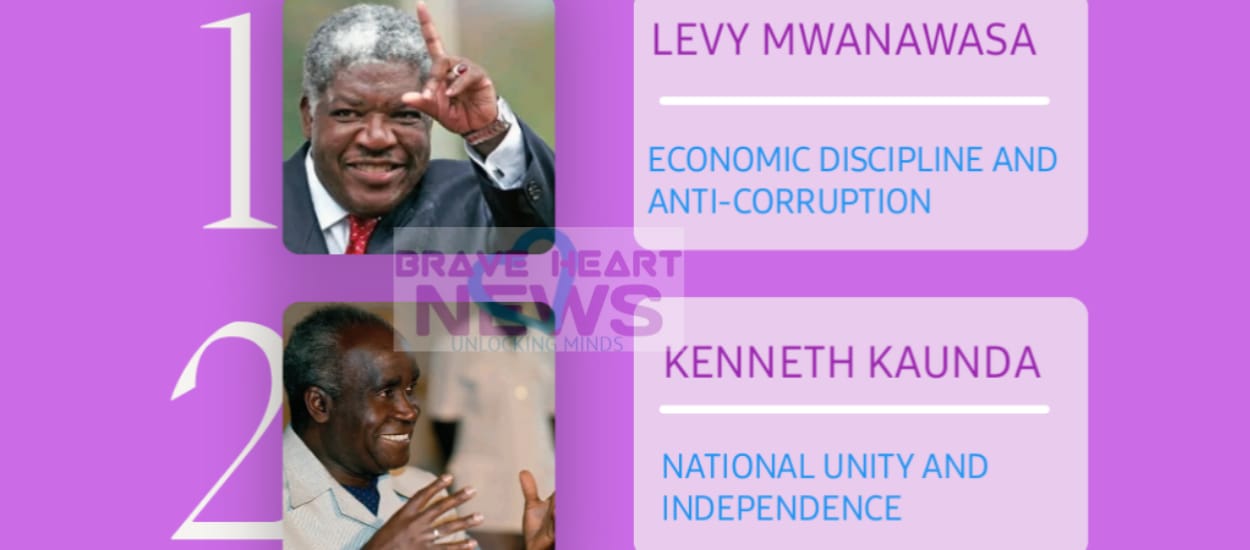
1. Kenneth Kaunda deliberately built a culture of national unity
Perhaps the biggest reason is the foundation laid by Zambia’s first President, Kenneth Kaunda.
At independence, Zambia inherited a country with more than 70 ethnic groups, different languages and distinct traditional identities.
Kaunda understood a danger that had destabilised other African countries: political leaders could exploit ethnic differences to mobilise communities against one another.
His response was the national philosophy:
ONE ZAMBIA, ONE NATION.
The idea was that people could belong to different tribes, speak different languages and practise different customs, but they belonged to one country.
This helped create a national identity that was bigger than individual ethnic identities.
It did not eliminate tribalism or political divisions, but it gave the country a unifying national principle.
2. Zambia chose diplomacy over military confrontation
This is another major factor.
When Zambia gained independence in 1964, several neighbouring territories were still under colonial or white-minority rule.
Kaunda supported liberation movements fighting for independence in Zimbabwe, Namibia, South Africa, Angola and Mozambique.
Lusaka became an important centre for African liberation movements.
But there was a danger: supporting liberation movements meant Zambia could become a target of neighbouring regimes.
And it did.
Rhodesian forces conducted cross-border attacks, including raids on Zambia in 1979. South African forces also targeted anti-apartheid networks operating from Zambia.
Rather than declaring war on these countries, Zambia combined political support for liberation movements with diplomatic engagement and careful management of its foreign relations.
It was a difficult balancing act.
3. Zambia did not allow neighbouring wars to become its own wars
Consider the Angola situation of Savimbi and Santos,
UNITA operated near Zambia’s western borders. Angola’s civil war created refugees, security concerns and economic disruption.
Zambia could have become deeply involved in the conflict.
Instead, it increasingly positioned itself as a mediator.
In 1994, the Lusaka Protocol was signed between the Angolan government and UNITA.
In 1998, Lusaka also hosted negotiations over the conflict in the Democratic Republic of Congo.
Zambia’s approach was generally to encourage negotiations rather than send its military into neighbouring wars.
This was particularly important in 1998, when Angola, Zimbabwe and Namibia intervened militarily in the DRC. Zambia did not join that military intervention.
It chose diplomacy.
4. No single ethnic group dominated the country
Zambia’s ethnic diversity has, in some respects, worked in its favour.
Unlike countries where political and economic power became heavily concentrated in one ethnic community, Zambia’s national politics developed around a broader collection of communities.
Intermarriage, shared religious affiliations, migration and economic interactions also created connections across ethnic boundaries.
This made it more difficult for political disagreements to develop into a sustained nationwide ethnic war.
However, Zambia has experienced tribal rhetoric and politically motivated regional divisions. It would be wrong to suggest these problems do not exist.
5. Zambia experienced a relatively peaceful independence transition
Another important difference is how Zambia obtained independence.
Unlike Angola and Mozambique, which experienced armed liberation struggles against Portuguese colonial rule, Zambia’s independence was achieved largely through political mobilisation, constitutional negotiations and nationalist pressure.
There was resistance and political violence during the struggle, but not a prolonged nationwide independence war.
This meant Zambia did not inherit the same degree of militarisation and armed factionalism that affected some neighbouring countries.
6. The 1991 transition of power set an important precedent
This is one of the strongest examples of Zambia’s political culture.
After ruling for 27 years, Kaunda faced growing opposition and demands for multiparty democracy.
In October 1991, elections were held.
Kaunda lost to Frederick Chiluba.
Instead of mobilising the military to retain power, he accepted defeat and handed over the presidency.
That was significant.
Across parts of Africa, political leaders who lost elections sometimes resorted to violence, military intervention or constitutional manipulation to remain in office.
Zambia demonstrated that a president could lose an election and peacefully leave State House.
The country has subsequently experienced political tensions, attempted coups and episodes of electoral violence, but the tradition of civilian transfers of power has remained important.
7. But Zambia has actually experienced attacks and conflict
It is important not to rewrite history by suggesting Zambia has always been peaceful.
Some significant incidents include:
* 1970s: Rhodesian military operations and landmine incidents along Zambia’s borders.
* 1978: Rhodesian forces bombed refugee camps in Zambia.
* 1979: Rhodesian forces conducted raids against targets in Zambia, including attacks on ANC-linked facilities in Lusaka.
* 1990: Zambia experienced a failed coup attempt led by Lieutenant Mwamba Luchembe.
* 1997: Another attempted coup occurred under the Chiluba administration.
Zambia also hosted large numbers of refugees fleeing conflicts in Angola, Mozambique and the DRC.
In other words, Zambia has experienced the effects of war without becoming a country consumed by civil war itself.
What is the real secret behind Zambia’s peace?
Brave Heart News identified the five major factors:
1. National unity: Reduced the potential for ethnic fragmentation
2. Diplomacy: Prevented regional conflicts from becoming direct wars
3. Political tolerance: Helped manage competing political interests
4. Leadership: Kaunda established a strong national unity philosophy
5. Peaceful transfers of power: Established an important democratic precedent
But Brave Heart News want to introduce one more interesting dimension.
The paradox of Zambia: A peaceful country surrounded by war
Zambia’s geographical position could easily have made it a battlefield.
It borders eight countries. Several experienced liberation wars, civil wars or prolonged political instability.
Yet its geographical position also made peace economically necessary.
Zambia depends on regional trade routes, transport corridors, energy cooperation and cross-border commerce.
A major war would threaten its economy, copper exports, food supplies and national security.
There was therefore a strong incentive for successive governments to avoid military confrontation.
Chatham House’s research on Zambia’s foreign relations identifies its geographical position, leadership, sovereignty and economic development interests as important influences on its foreign policy. Introduction +1
This is Brave Heart News’ biggest takeaway
Zambia’s peace is not an accident, and it is certainly not guaranteed.
It is the product of historical decisions, political compromises, diplomacy and a national identity that has survived several difficult periods.
However, we should not become complacent.
A country does not necessarily go to war because its people hate one another. Sometimes it goes to war because political leaders create conditions in which disagreements can only be settled through violence.
That is perhaps the most important lesson Zambia can learn from Angola, Mozambique, the DRC and other countries.
And perhaps the most important responsibility for today’s Zambian political leadership is to protect the one thing that generations before us managed to preserve: peace.
One Zambia, One Nation should never become just a national slogan. It must remain a national responsibility.
JUST TO UNLOCK YOUR MIND: SOURCES
Brave Heart News extracted the above information from the SOURCES BELOW:
* Learninglink.Oup — © Oxford University Press, 2017. Case Study: Polit (11 Feb 2026)
* Chathamhouse — Zambia’s developing international relations | Introduction (7 Mar 2023)
* Chathamhouse — Emerging powers in Africa: Regional and national economic linkages in Eastern and Southern Africa (26 Aug 2022)
* Idrc-Crdi — Security and Democracy in Southern Africa (1 Jan 2007)
* Wrap.Warwick.Ac — From low-conflict polity to democratic domestic peace: explaining Zambian exceptionalism (22 Jun 2009)
* Documents1.Worldbank — World Bank Document
* Shcas.Shnu.Edu — Historical Dictionary of Civil Wars in Africa (16 Dec 2010)
* Tandfonline — Sixty Years Since Zambia’s Independence: Revisiting Scholarship on the Struggle Against Colonialism (14 Mar 2025)
* Academic.Oup — Electoral violence and the legacy of authoritarian rule in Kenya and Zambia (2 Dec 2019)
* Academic.Oup — Stalemate and the Termination of Civil War: Rhodesia Reassessed (1 Jan 2004)
* Journals.Sagepub — Electoral violence and the legacy of authoritarian rule in Kenya and Zambia (2 Dec 2019)
* Journals.Codesria — CODESRIA Bulletin Online, No. 19, June 2021 - Reflecting on Kaunda’s Political legacies (28 Jun 2021)
* Journals.Codesria — CODESRIA Bulletin Online, No. 19, June 2021 - Reflecting on Kaunda’s Political legacies (28 Jun 2021)
* Journals.Codesria — CODESRIA Bulletin Online, No. 19, June 2021 - Reflecting on Kaunda’s Political legacies (28 Jun 2021)
* 1997-2001.State — title (1 Sep 1997)
* Blogs.Lse.Ac — Zambia and Rhodesia were unlikely economic bedfellows post-independence - Africa at LSE (6 Dec 2024)
* Docsonline — Zambia Conflict: History & Timeline | DocsOnline
*Hrw — General (1 May 1997)




Comments
No comments yet. Be the first to comment!
Leave a Comment